Factors that Erode Democracies

A healthy democracy can weaken and fail when political, economic, and social problems build up together. Authoritarian leaders often use the rules of democracy against themselves to gain more control.

For example, in Hungary, the government gradually consolidated power by weakening the courts, taking control of most media, and redrawing electoral maps to give itself an unfair advantage. Similarly, leaders in other countries have stacked courts with their supporters, taken over independent news outlets, and forced legislatures to simply approve their decisions without real debate.

When political parties become extremely divided and start seeing each other as enemies, the system suffers. This kind of hostility can lead to more threats and even violence against election officials. False information spread online worsens the situation. Lies about stolen elections or foreign plots can cause people to lose faith in voting and the government.

Large gaps between the rich and the poor also threaten democracy. When wealth is concentrated, so is power. Wealthy individuals or big corporations can use massive donations, super PACs, and lobbying to shape laws, mostly for their own benefit rather than the public good.

Finally, democracy can be attacked directly. This includes military coups, police taking over, laws that make it harder for certain people to vote, election tampering, and worries about other countries meddling to change election results.

The situation in the United States represents a current example. Claims that elections are rigged have been linked to an increase in threats against election workers. Political fundraising from undisclosed “dark money” sources shows how money can buy political influence. Around the world, there is constant worry about foreign hackers targeting elections and about fake news spreading on social media to confuse voters.

Recognizing the warning signs is the first step citizens can take to protect their democratic systems. Vigilance involves watching for trends like:

  • Erosion of Institutional Trust: When leaders consistently attack independent courts, credible media, and non-partisan election officials as “enemies.”
  • Normalization of Political Violence: When threats or acts of intimidation against opponents, journalists, or officials become frequent or are downplayed.
  • Changes to Election Rules: When new laws or district maps are drawn to unfairly advantage one party or make voting more difficult for certain groups.
  • Concentration of Power: When a single party or leader systematically weakens the legislature, takes control of oversight bodies, or dominates public media.

By identifying these patterns early, citizens, civil society, and a free press can mobilize to demand accountability, support institutional safeguards, and use legal and electoral means to push back.

References

Bánkuti, M., Halmai, G., & Scheppele, K. L. (2022). Hungary’s democratic backsliding. European Constitutional Law Review, 18(1), 157–178.

Ginsburg, T., & Huq, A. Z. (2021). How to save a constitutional democracy. University of Chicago Law Review, 88(2), 489–526.

Levitsky, S., & Ziblatt, D. (2023). How democracies die. Penguin Books.

McCoy, J., & Somer, M. (2021). Overcoming polarization. Journal of Democracy, 32(1), 6–21.

Tucker, J. A., Guess, A., Barberá, P., Vaccari, C., Siegel, A., Sanovich, S., Stukal, D., & Nyhan, B. (2023). Social media, political polarization, and disinformation in comparative perspective. Oxford University Press.

Winters, J. A. (2022). Oligarchy and democracy. American Political Science Review, 116(3), 792–806.
The Weight of History: How U.S. Policy Toward Haiti Was Forged 

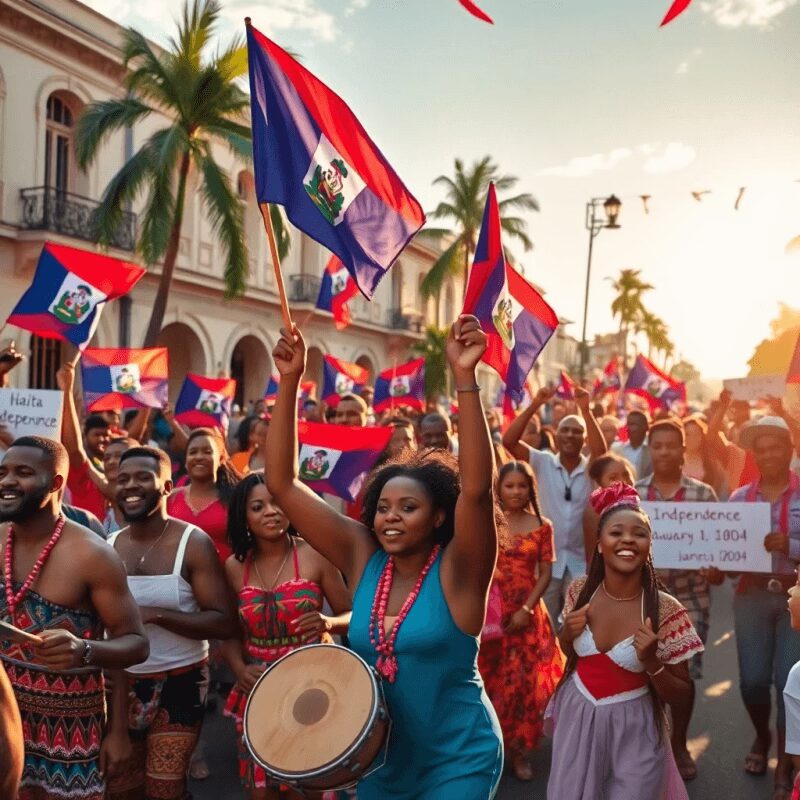
The relationship between Haiti and the United States had never been one of equals. From the moment Haiti declared its independence in 1804, becoming the first Black republic in the world after a bloody revolution against French colonial rule, the U.S. regarded the fledgling nation with suspicion, if not outright hostility. Fearful that Haiti’s success would inspire enslaved people in America to revolt, the U.S. refused to recognize Haitian sovereignty for decades, while Southern lawmakers lobbied to isolate the island economically. This early antagonism set the tone for centuries of intervention, where American policy oscillated between neglect and manipulation, always prioritizing geopolitical interests over Haitian self-determination. 

By the early 20th century, the U.S. had shifted from isolation to outright occupation. In 1915, under the guise of stabilizing Haiti’s political turmoil and protecting American business interests, U.S. Marines invaded and took control of the country’s finances, infrastructure, and government. For nineteen years, the occupation reinforced racial hierarchies, with white American officials overseeing forced labor campaigns that echoed Haiti’s colonial past. Though the Marines withdrew in 1934, they left behind a centralized military that would later become the tool of dictators—a legacy of instability that Washington would exploit during the Cold War. 

When anti-communist paranoia swept U.S. foreign policy in the mid-20th century, Haiti’s fate was sealed. The U.S. backed the brutal Duvalier regime—first François “Papa Doc,” then his son Jean-Claude “Baby Doc,” turning a blind eye to their death squads and embezzlement so long as they kept Haiti from aligning with Cuba or the Soviet Union. American aid flowed to the Duvaliers, propping up their tyranny while ordinary Haitians suffered under repression and poverty. By the time the dictatorship crumbled in 1986, the country was hollowed out, its institutions corrupted, its economy gutted. And when Haiti finally attempted democracy with the election of Jean-Bertrand Aristide in 1990, the U.S. response was ambivalent at best. Though Washington initially supported his rise, it later acquiesced to his ouster—twice—leaving Haiti trapped in cycles of coups and foreign-backed interim governments. 

Even humanitarian interventions carried the stain of exploitation. After the catastrophic 2010 earthquake, the U.S. mobilized aid but also reinforced militarized control, sending troops rather than prioritizing Haitian-led recovery. Later, United Nations peacekeepers introduced cholera into Haiti through negligent sanitation, sparking an epidemic that killed thousands—a disaster for which the UN refused full accountability. Meanwhile, American agricultural policies, from dumped subsidized rice to coercive trade deals, undercut Haitian farmers, deepening the nation’s dependence on foreign aid. 

By the 21st century, these historical burdens manifested in U.S. immigration policies that treated Haitians as a problem to be contained rather than a people deserving refuge. Temporary Protected Status (TPS) was granted begrudgingly after disasters, then threatened with revocation under administrations more concerned with nativist rhetoric than justice. The Biden administration, caught between progressive promises and political pragmatism, expanded TPS for some while continuing deportations for others—leaving families as Mireille’s torn across borders. 

And so, when gangs, armed with trafficked American weapons, overran Port-au-Prince, it was not merely a Haitian crisis. It was the inevitable outcome of decades in which U.S. policy had undermined Haiti’s sovereignty, sabotaged its institutions, and then punished its people for fleeing the chaos that foreign interference helped create. The cruelty was in the pattern: history had taught Haiti that American concern was always conditional, always self-interested. And for the thousands of Haitians living in limbo, their futures hinged on a nation that had yet to reckon with its role in their suffering.

Get your copy of Witness in the Dust by Lorrie C. Reed.