The Weight of History: How U.S. Policy Toward Haiti Was Forged 

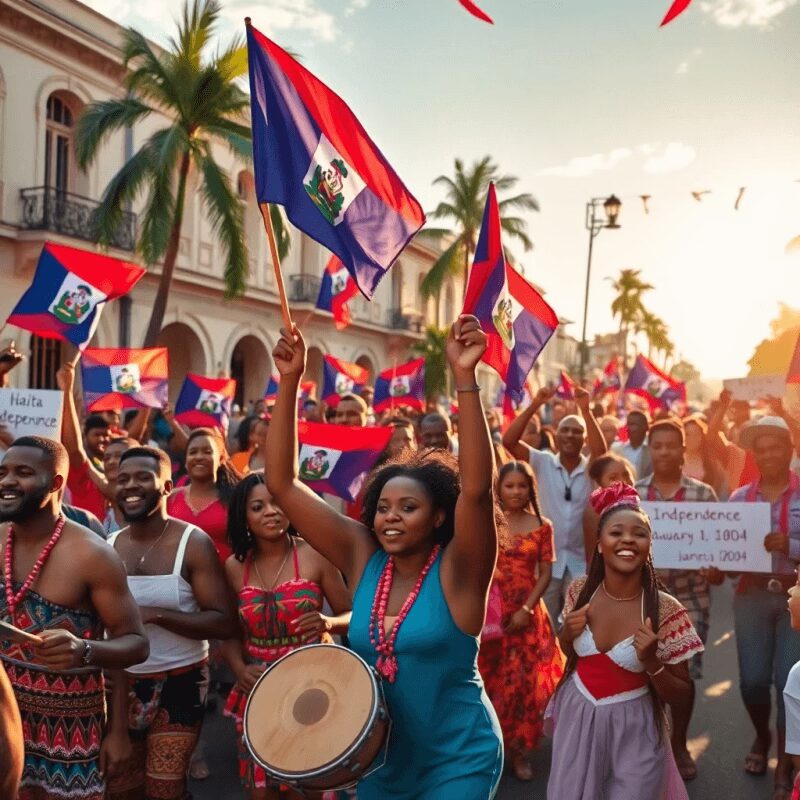
The relationship between Haiti and the United States had never been one of equals. From the moment Haiti declared its independence in 1804, becoming the first Black republic in the world after a bloody revolution against French colonial rule, the U.S. regarded the fledgling nation with suspicion, if not outright hostility. Fearful that Haiti’s success would inspire enslaved people in America to revolt, the U.S. refused to recognize Haitian sovereignty for decades, while Southern lawmakers lobbied to isolate the island economically. This early antagonism set the tone for centuries of intervention, where American policy oscillated between neglect and manipulation, always prioritizing geopolitical interests over Haitian self-determination. 

By the early 20th century, the U.S. had shifted from isolation to outright occupation. In 1915, under the guise of stabilizing Haiti’s political turmoil and protecting American business interests, U.S. Marines invaded and took control of the country’s finances, infrastructure, and government. For nineteen years, the occupation reinforced racial hierarchies, with white American officials overseeing forced labor campaigns that echoed Haiti’s colonial past. Though the Marines withdrew in 1934, they left behind a centralized military that would later become the tool of dictators—a legacy of instability that Washington would exploit during the Cold War. 

When anti-communist paranoia swept U.S. foreign policy in the mid-20th century, Haiti’s fate was sealed. The U.S. backed the brutal Duvalier regime—first François “Papa Doc,” then his son Jean-Claude “Baby Doc,” turning a blind eye to their death squads and embezzlement so long as they kept Haiti from aligning with Cuba or the Soviet Union. American aid flowed to the Duvaliers, propping up their tyranny while ordinary Haitians suffered under repression and poverty. By the time the dictatorship crumbled in 1986, the country was hollowed out, its institutions corrupted, its economy gutted. And when Haiti finally attempted democracy with the election of Jean-Bertrand Aristide in 1990, the U.S. response was ambivalent at best. Though Washington initially supported his rise, it later acquiesced to his ouster—twice—leaving Haiti trapped in cycles of coups and foreign-backed interim governments. 

Even humanitarian interventions carried the stain of exploitation. After the catastrophic 2010 earthquake, the U.S. mobilized aid but also reinforced militarized control, sending troops rather than prioritizing Haitian-led recovery. Later, United Nations peacekeepers introduced cholera into Haiti through negligent sanitation, sparking an epidemic that killed thousands—a disaster for which the UN refused full accountability. Meanwhile, American agricultural policies, from dumped subsidized rice to coercive trade deals, undercut Haitian farmers, deepening the nation’s dependence on foreign aid. 

By the 21st century, these historical burdens manifested in U.S. immigration policies that treated Haitians as a problem to be contained rather than a people deserving refuge. Temporary Protected Status (TPS) was granted begrudgingly after disasters, then threatened with revocation under administrations more concerned with nativist rhetoric than justice. The Biden administration, caught between progressive promises and political pragmatism, expanded TPS for some while continuing deportations for others—leaving families as Mireille’s torn across borders. 

And so, when gangs, armed with trafficked American weapons, overran Port-au-Prince, it was not merely a Haitian crisis. It was the inevitable outcome of decades in which U.S. policy had undermined Haiti’s sovereignty, sabotaged its institutions, and then punished its people for fleeing the chaos that foreign interference helped create. The cruelty was in the pattern: history had taught Haiti that American concern was always conditional, always self-interested. And for the thousands of Haitians living in limbo, their futures hinged on a nation that had yet to reckon with its role in their suffering.

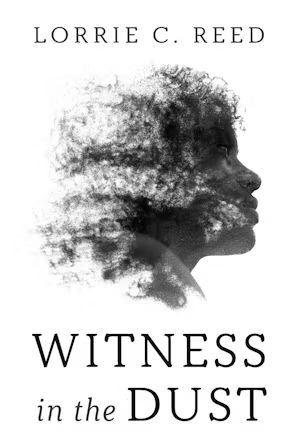
Get your copy of Witness in the Dust by Lorrie C. Reed.

A Call to Witness

By Lorrie C. Reed, M.Div., Ph.D.

My call to witness did not arrive as a sudden command, but as a quiet, persistent pressure that built over time, until it became undeniable. It emerged from my own stark confrontation with something I could not unsee: an act of injustice, a pattern of harm, a truth that had been buried or denied. I first felt it as a deep internal disturbance, a fracture in my personal peace that refused to heal through my own simple inaction.

This summons was, for me, fundamentally a call “to” something—a vocation rooted in presence and purpose. It was a directive to turn toward the brokenness, to stand firm within the difficult reality, and to become an active participant in truth. I felt a profound obligation to the event, the facts, and the affected community. My sense of duty was tied to memory and relationship; to look away felt like a betrayal of what I had seen and a surrender to the lie of silence. The devastation I witnessed was not an end, but a terrible, necessary clearing that demanded my response. I was called to the disciplined work of illumination, a vocation of gathering evidence, holding up a mirror, and speaking with clarity. It was a calling defined by what I was drawn to affirm and defend.

I understand this stands in clear contrast to a call “out of” something, which is a call away from circumstance. That summons is oriented around release, an invitation to depart from a damaging environment, a stagnant situation, or a source of personal trauma for the sake of individual survival, healing, or growth. It is a call to find peace by creating distance, to heal away from the source of the pain, and to prepare for an unknown future on new ground. The vision turns toward a blank page and an open horizon.

For me, the difference lies in orientation and focus. A call  “to” is anchored in commitment to something external: a truth, a place, a people. The decisive element felt spiritual and rooted, demanding my engagement with the very source of the disturbance. My internal debate was between loyalty and flight, and my choice to stay and speak became my act of solidarity and restoration.

So, I am a witness, one who received and answered this specific call “to.”  My mind has become a crucible of cross-referenced facts, battling fear for the sake of accuracy. My heart carries a heavy weight of sorrow and risk, anchored by a stronger, stubborn sense of responsibility to the outside world. I am not necessarily braver than others; I had simply reached a point where the personal cost of looking away outweighed the profound tension of stepping forward. It is a vocation that chooses the difficult path of confrontation, driven by my conviction that to faithfully bear the truth is to plant the first, necessary seed for its remedy.

Witness in the Dust Now Available!

Check out this announcement by the author: https://www.youtube.com/watch?v=dssRKo8IOrY

Witness in the Dust is a novel about Celine, a young Haitian woman who leaves home after several hurricanes and an earthquake almost destroyed her country. When she arrives in Chicago with dreams of furthering her education and pursuing the American dream, she encounters an overly aggressive deportation policy and many unkept promises. She realizes that, like many other people of color, she is not welcome in America. With the support of her community and church, she begins to grapple with her beliefs about the big questions of equality, freedom, and citizenship. She begins to wonder: Is there really a place for her in this world coated in the dust of a decaying democracy?

Purchase your copy from Amazon at: https://a.co/d/dUSA1YM

Copies are also available directly from the publisher at: https://wipfandstock.com/9798385264490/witness-in-the-dust/

Witness in the Dust Description

Description of the Book

Witness in the Dust is a novel about a young Haitian woman’s resilience, faith, and the unbreakable human spirit in a democracy torn apart by moral struggles. When earthquakes and hurricanes devastate Port-au-Prince, Celine, full of idealism, faith, and quiet strength, seeks a better life in the United States. Celine travels to Chicago, where she joins fellow immigrants fighting for dignity in a system that is unwelcoming to them. Drawing on resources from her community and church, she becomes a witness and advocate for justice. Before she can claim her place in the promised land, she must reconcile her beliefs about equality, democracy, citizenship, and the promises of sanctuary for people yearning to breathe free.

The novel is a work of political fiction that sketches a vision of the enduring strength of an immigrant community, a church fighting for justice, and the unyielding spirit of those who refuse to be broken. Lyrical and analytical, the novel explores equality, democracy, ideological divisions, and whether reconciliation is possible in a world coated in the dust of decaying promises.

Witness in the Dust sheds light on a democracy that is in decay. The plot exposes an overly aggressive immigration enforcement policy and America’s failure to keep its promises to some cultural groups who seek opportunities in the “land of the free.” The novel presents a vision for what can happen when diverse communities, the Church, and resilient individuals stand in solidarity with their neighbors.